IICRC Water Restoration Standards in Brooks Crossing: What Certification Means
At 2:14 a.m. on a Tuesday last winter, a Brooks Crossing homeowner stood ankle deep in her hallway holding a phone in one hand and a soaked throw pillow in the other. A supply line under her kitchen sink had let go around midnight. By the time she called Brooks Crossing Water Restoration, water had crossed three rooms and was wicking up the baseboards. Her first question was not about price. It was, "Are you actually certified, or is that just on the website?"
That question matters more than most homeowners realize. IICRC certification, short for the Institute of Inspection, Cleaning and Restoration Certification, is the technical standard the entire industry is supposed to follow. The S500 standard governs water damage. The S520 covers mold. When you hire a certified crew, you are hiring people who have been tested on drying science, contamination categories, moisture mapping, and documentation that insurance carriers actually accept. When you hire someone without it, you are gambling with your subfloor, your drywall, and your claim. This post walks through real Brooks Crossing jobs Brooks Crossing Water Restoration has handled, what IICRC training changed about the outcome, and why the letters after a technician's name should matter to you when your floor is wet and the clock is running.
Quick Answer: What IICRC Certification Means for Your Loss
IICRC certification means a water restoration technician has passed standardized training on the ANSI/IICRC S500 standard, the document that governs how Category 1, 2, and 3 water losses are handled in the United States. For you, it means the crew drying your Brooks Crossing home uses moisture meters instead of guesswork, documents psychrometric readings your adjuster will accept, and knows when drywall can dry in place versus when it must come out.
The Three Things Certification Actually Proves
- The technician passed a proctored exam on water categories, drying science, and contamination control.
- The firm carries general liability insurance at IICRC minimums.
- The company agrees to a written code of ethics, including honest scope and pricing.
- Continuing education credits are completed every two to four years to maintain active status.
Why Certification Affects Your Insurance Claim
Carriers like State Farm, Allstate, and Erie know the S500 standard. When a restoration firm submits drying logs and scope that match IICRC language, claims move faster and pay closer to the submitted amount. When a non certified contractor submits a vague invoice, expect partial payment, supplements, and delays that can stretch 30 to 60 days. In some cases, carriers will deny line items entirely if the documentation cannot demonstrate that removal or replacement was warranted under the standard.
What Adjusters Look For in Brooks Crossing
- Daily moisture logs signed by a WRT technician
- Photos of equipment placement with timestamps
- Category and class classification on the first page of the scope
- Justification for any structural material removal
- Final readings showing materials reached the agreed dry standard
Questions Worth Asking Before You Sign
- What dry standard are you targeting for my hardwood, drywall, and framing?
- How many air movers and dehumidifiers will be running, and for how many days?
- Will you provide the daily log and final reading report directly to my adjuster?
- If materials cannot be dried in place, what is the demo trigger point in your scope?
Certification is not a marketing badge. It is the framework that decides whether your Brooks Crossing home dries correctly, whether mold shows up six weeks later, and whether your insurance check covers the actual cost of putting your house back together.
The IICRC Certifications That Matter on a Water Job
Not every IICRC card is the same. A carpet cleaning cert does not qualify a tech to handle a sewage backup. Here is the hierarchy you should look for when a crew shows up in your driveway.
| Certification | What It Covers | When You Need It |
|---|---|---|
| WRT (Water Restoration Technician) | Category 1, 2, 3 water, drying principles, moisture mapping | Every water loss, minimum requirement |
| ASD (Applied Structural Drying) | Advanced drying, dehumidifier sizing, in place drying | Hardwood, plaster, and multi room losses |
| AMRT (Applied Microbial Remediation) | Mold containment, HEPA filtration, clearance testing | Losses older than 72 hours or visible mold |
| OCT (Odor Control Technician) | Sewage odor, smoke, and biological residue | Category 3 black water and sewage events |
What Brooks Crossing Water Restoration Carries On Every Brooks Crossing Truck
- WRT certified lead techs on every dispatch
- ASD trained crew for hardwood and finished basement losses
- AMRT certification for mold containment when timelines slip past 48 hours
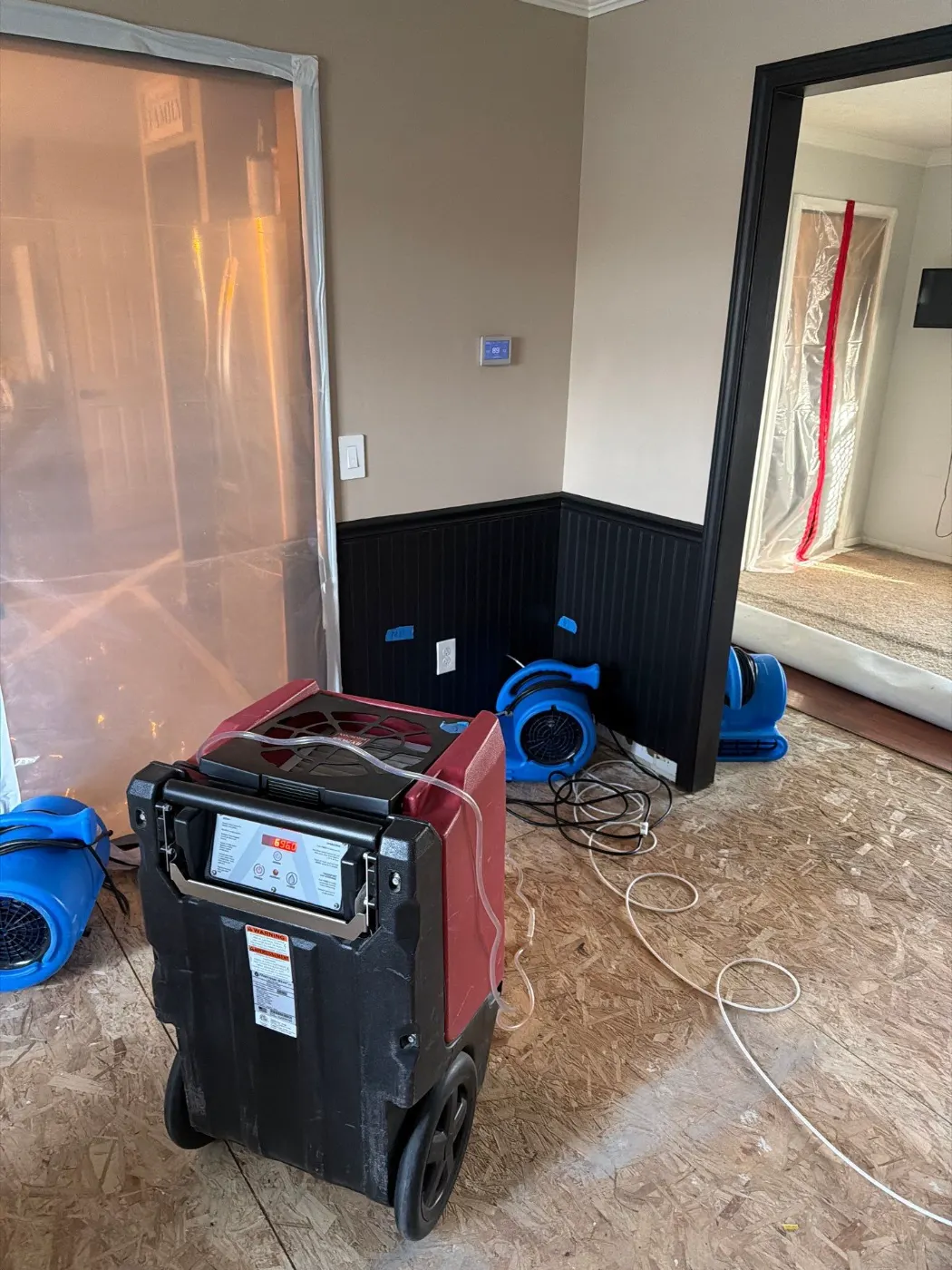
- Calibrated moisture meters, thermal cameras, and thermo hygrometers
- Annual recalibration records available for adjuster review
If you want a deeper read on why timing matters so much, our breakdown of how fast mold grows after water damage explains the 48 hour rule the S500 standard is built around.
How to Verify a Restoration Company Is Actually Certified
Anyone can put a logo on a truck. Here is how to confirm certification in under three minutes, even at midnight with water still spreading.
- Ask for the firm's IICRC certification number.
- Search that number on the IICRC public verification tool.
- Confirm the certifications listed match the work being proposed.
- Ask which technician on site holds WRT, and whether ASD is on the crew.
- Request a written scope referencing S500 categories and classes.
- Verify the firm status is current, not expired or suspended.
Red Flags You Should Not Ignore
- No moisture meter readings recorded on day one
- Refusal to provide a written scope before demo begins
- Flat rate pricing with no equipment count
- Pressure to sign a direction to pay before inspection is complete
- Inability to name a specific certification or trainer
- Generic invoices without daily logs attached
For more on choosing the right firm, see our piece on how to choose a water damage company near you.
What the S500 Standard Requires on Your Job
The S500 is roughly 300 pages of technical guidance. Most homeowners never need to read it, but you should know what it forces a restoration firm to do. The standard is updated roughly every five years through ANSI consensus review, meaning the practices your crew follows reflect current building science, not field shortcuts passed down on the job.
Required Documentation
- Initial moisture readings on every affected material
- Daily psychrometric logs (temperature, relative humidity, grains per pound)
- Equipment placement diagram with air mover and dehumidifier counts
- Water category classification with justification
- Final dry standard verification before equipment pickup
- Material salvageability decisions tied to S500 sections, not opinion
Required Job Site Practices
- Containment for any Category 2 or 3 loss
- PPE matched to contamination level
- Antimicrobial application only when justified, not as a default upcharge
- Removal of unsalvageable porous materials before drying begins
- Daily reassessment of drying progress against the established dry standard
Water category drives almost every decision on your job. If you are unsure what category your loss falls into, our guide to Category 1 vs 2 vs 3 water damage walks through the differences with real examples from Brooks Crossing homes.
Certification Is the Floor, Not the Ceiling
IICRC certification tells you a Brooks Crossing restoration firm has met the minimum standard for handling your loss correctly. Experience, equipment, and honesty are what separate a good outcome from a fight with your insurance carrier. Brooks Crossing Water Restoration has built our reputation on showing up fast, documenting every reading, and telling homeowners the truth about what can be saved and what cannot. If you have water in your home tonight, call us for a free inspection. If we cannot help, we will tell you directly and refer you to someone who can.
Frequently Asked Questions
Is IICRC certification legally required for water damage work in Brooks Crossing?
No, IICRC certification is not a legal license, but insurance carriers and adjusters in Brooks Crossing routinely expect it, and most reputable companies including Brooks Crossing Water Restoration maintain it voluntarily as the industry standard.
How do I verify a company is really IICRC Certified?
Go to the IICRC website and search the certified firm database by company name or certificate number. Brooks Crossing Water Restoration will provide our number on request before any work begins.
What is the difference between a certified technician and a Certified Firm?
A certified technician has passed individual courses like WRT or ASD. A Certified Firm, like Brooks Crossing Water Restoration, means the entire business meets ongoing training, insurance, and ethics requirements at the company level.
Do IICRC standards affect my insurance claim in Brooks Crossing?
Yes. Adjusters in Brooks Crossing often request documentation that aligns with the S500 standard, including moisture logs and category classification. Work that follows IICRC guidelines is far less likely to be questioned or denied.
What should I ask a restoration company before hiring them?
Ask for their IICRC certificate number, which technicians will be on site, what category and class your loss falls under, and whether you will receive daily moisture readings. Brooks Crossing Water Restoration answers all four before we start.
Have a restoration question?
Our IICRC certified Brooks Crossing crew is ready to help. Free assessments, estimate based on what we can sees, no pressure.